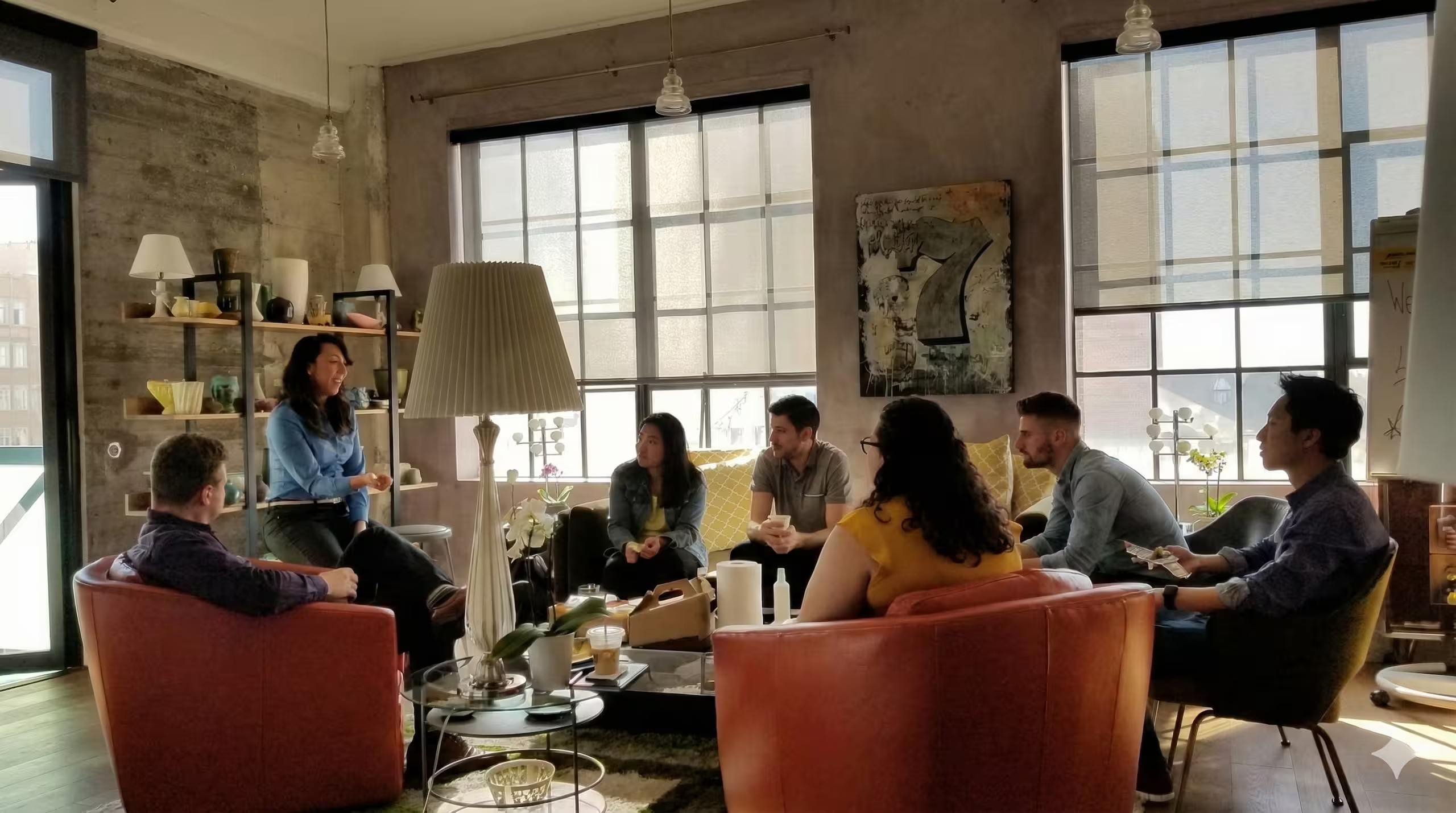
I yearned for the American dream long before I ever heard the term -while riding on my dad’s bus route across L.A.
My dad drove an L.A. city bus. On days when there was no babysitter to watch us, my little brother and I rode with him, feet dangling from cracked vinyl seats, for hours. We wound our way through Chinatown, Japantown, East L.A., and Crenshaw -neighborhoods with their own rhythms and histories. We rode with him throughgraveyard shifts and bus breakdowns. We sat on crowded seats with hard-working people from all walks of life.
It seemed everyone was in some sort of hustle - hurry to work, to school, or to the market across town where a dollar went further. Even my dad was in a hustle - working multiple shifts to make ends meet.


.png)
Late one night, while we were sleeping on the seat across from him, my dad drove over a pothole. I woke up suddenly.
“Shannon,” he said, glancing at me in the mirror. “You see how hard I’m working? This is why you have to go to college. And you need to get a scholarship. No matter how hard work, I can’t give you that.”
Even at six, I understood what he was really saying: education was the only path he could give me - if I could find a way to claim it.
Shortly after, my dad got hurt on the job. He slipped on an oil slick in the depot on a rainy night and hurt his back badly. Food stamps and Medicaid helped keep our family afloat. Those weren’t abstract policies to us; they were groceries, doctor’s visits, and rent.

Those early years shaped my understanding of economic security. They also planted the question that would guide my life’s work: How do we design systems where everyone has a fair shot at the American dream?


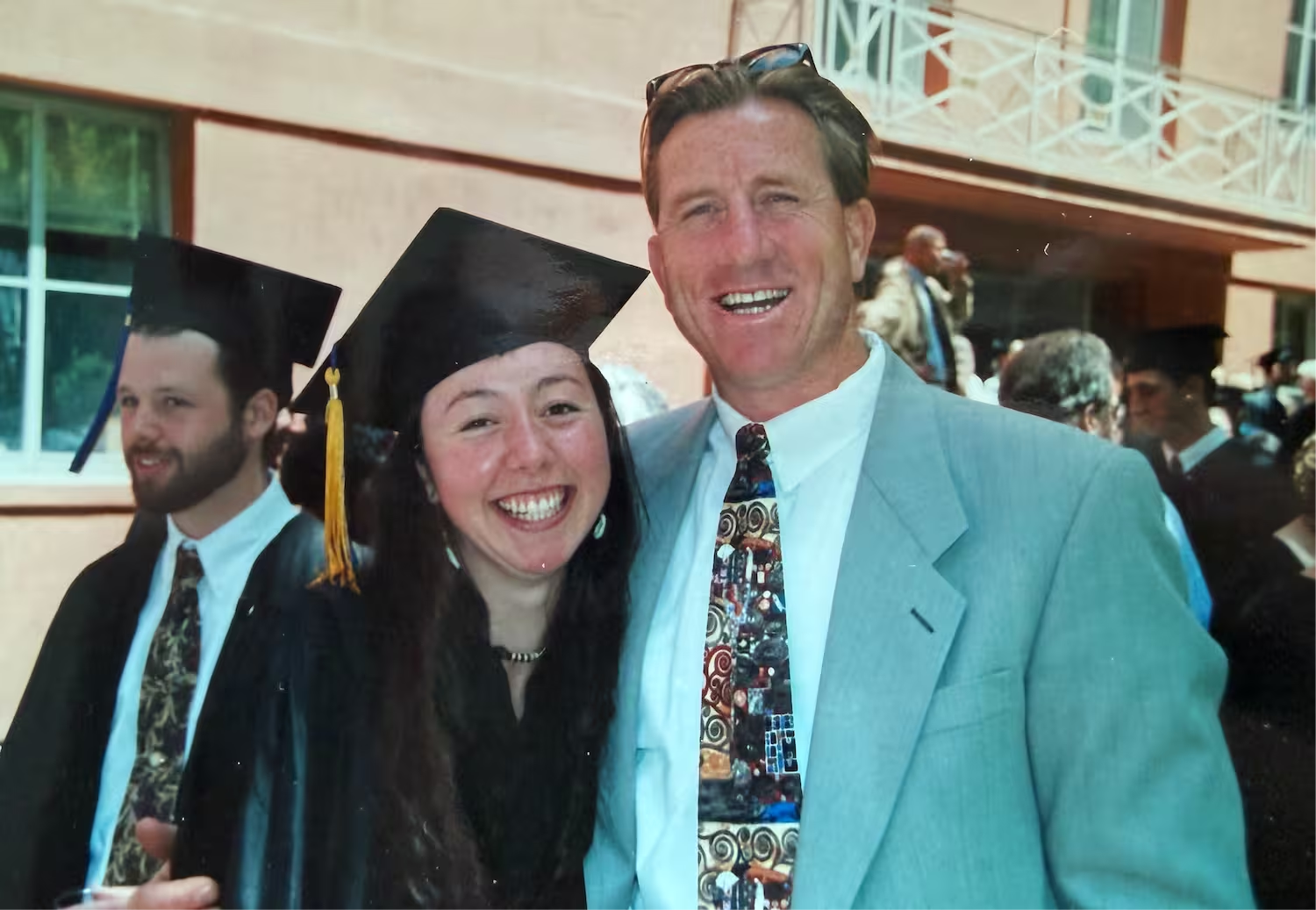
Like my Dad encouraged me, I hustled to get an education. I got a full-ride merit scholarship to U.C. Berkeley for my B.A., to the American University in Cairo for my M.A., and Columbia University for my Ph.D. My field of study? Sociology.
When I discovered sociology, the world I’d seen from the bus window finally made sense. The “sociological imagination” gave language to what I’d lived: that biography and history intertwine - that a child on a bus in Los Angeles can reach a university lecture hall not just by grit, but because a society invests in her family. It’s because of the wisdom of generations of Americans before me, who supported safety net programs as investments in our country’s common good, that I am the person I am today.
My life’s journey as an applied sociologist: professor, business woman, and government advisor and strategist.


In my twenties, I dedicated myself to teaching. I was a professor at East L.A. City College and eventually worked my way up to teaching in the Ivy League. In my thirties, I put my sociological training into practice, helping mission-driven organizations turn their visions for social change into real impact.
Starting in 2010, I worked as a researcher and trainer to help nonprofits and philanthropies reframe how we talk about social issues.
Working alongside nonprofits deepened my belief that social change requires both strategy and organizational capability. I grew increasingly curious about other types of organizational structures - like startups -for driving change in society.
I moved to San Francisco in 2012 and dove deep into the fast-paced tech world. For a few years, I took off my sociology hat to learn what it takes to run VC-backed, mission-based organizations in the ed tech and cleantech space. I learned that even a well-funded company with a bold vision and talented experts will fail if it can’t harness the collective intelligence of its people.
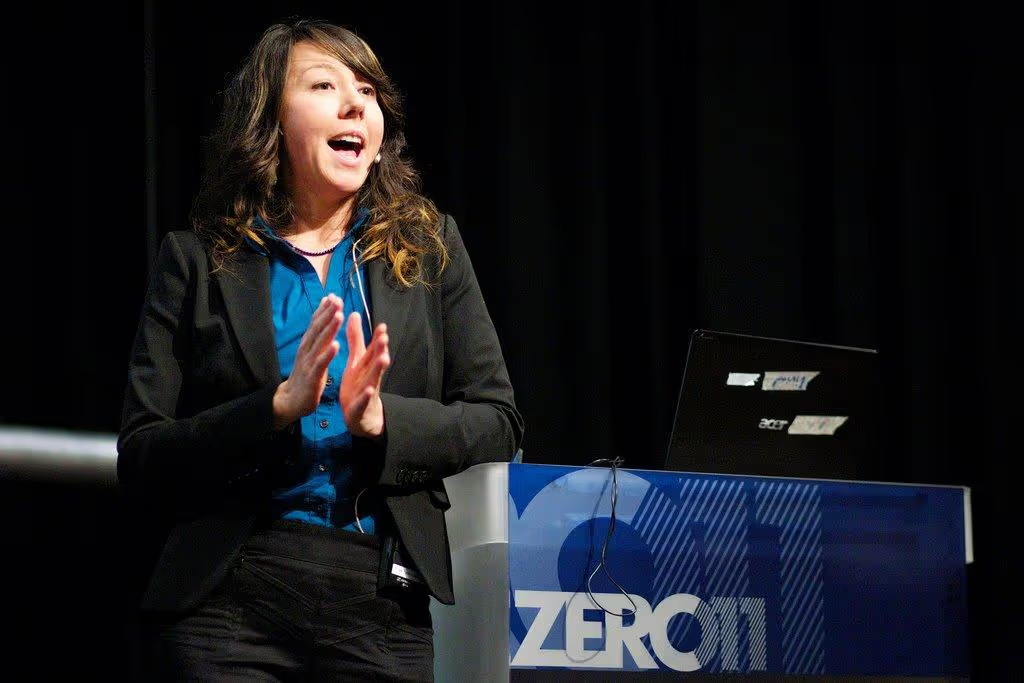
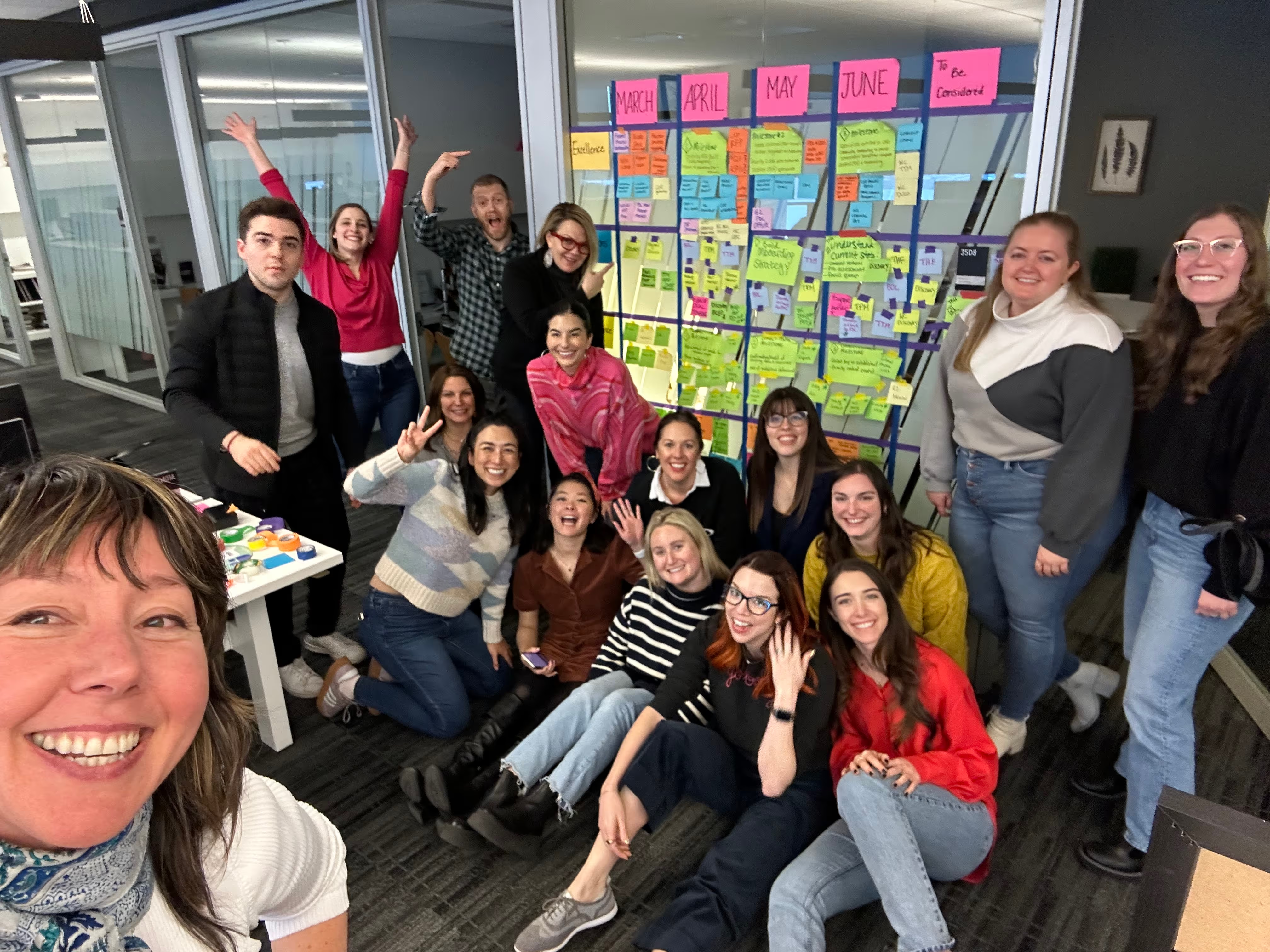
That’s when I started Epic Teams. In 2016, I founded a consultancy to help startups and Fortune 500s develop high performing organizational cultures. Our motto was to help organizations “deliver the right things, in the right way, and at the right speed for the people they serve.” Many of our clients, including L’Oreal, Gainsight, Lever, and others, have gone on to successful exits or exceeded their financial goals as a result.
In 2016, I founded Epic Teams to help startups and Fortune 500s build high-performing cultures. Our motto was to help organizations “deliver the right things, in the right way, and at the right speed for the people they serve.”
In 2020, when the pandemic hit, I watched public institutions struggle to deliver in the ways communities needed. It became clear that the systems shaping people’s lives needed the same organizational clarity and collective intelligence I had spent years helping companies build. That’s when I started the third and current part of my career. Now, I dedicate my talents and skills as a strategist for public sector organizations.
From 2022 to early 2025, I served as Senior Advisor to both the Chief Data Scientist at the White House and the Chief Data Officer at the U.S. Department of Commerce. I led the development of the FY25-28 Department of Commerce Data Strategy, co-founded the U.S. Tech Policy Network, and convened interagency communities of practice to advance data-driven federal program performance.
Today, I lead two complementary organizations: the Civic Wisdom Foundation - a nonprofit building data products to strengthen the collective intelligence of state and local governments - and Civic Wisdom Labs, a consulting and training firm dedicated to building high-performance public-sector cultures.
Lastly, I continue to teach about the importance of social movements as a Senior Fellow in the U.C. Berkeley Goldman School of Public Policy. My most recent course, Agile Policymaking for Improving Household Economic Security, tracks the last 100 years of movement-building for establishing the suite of safety net programs we have today.
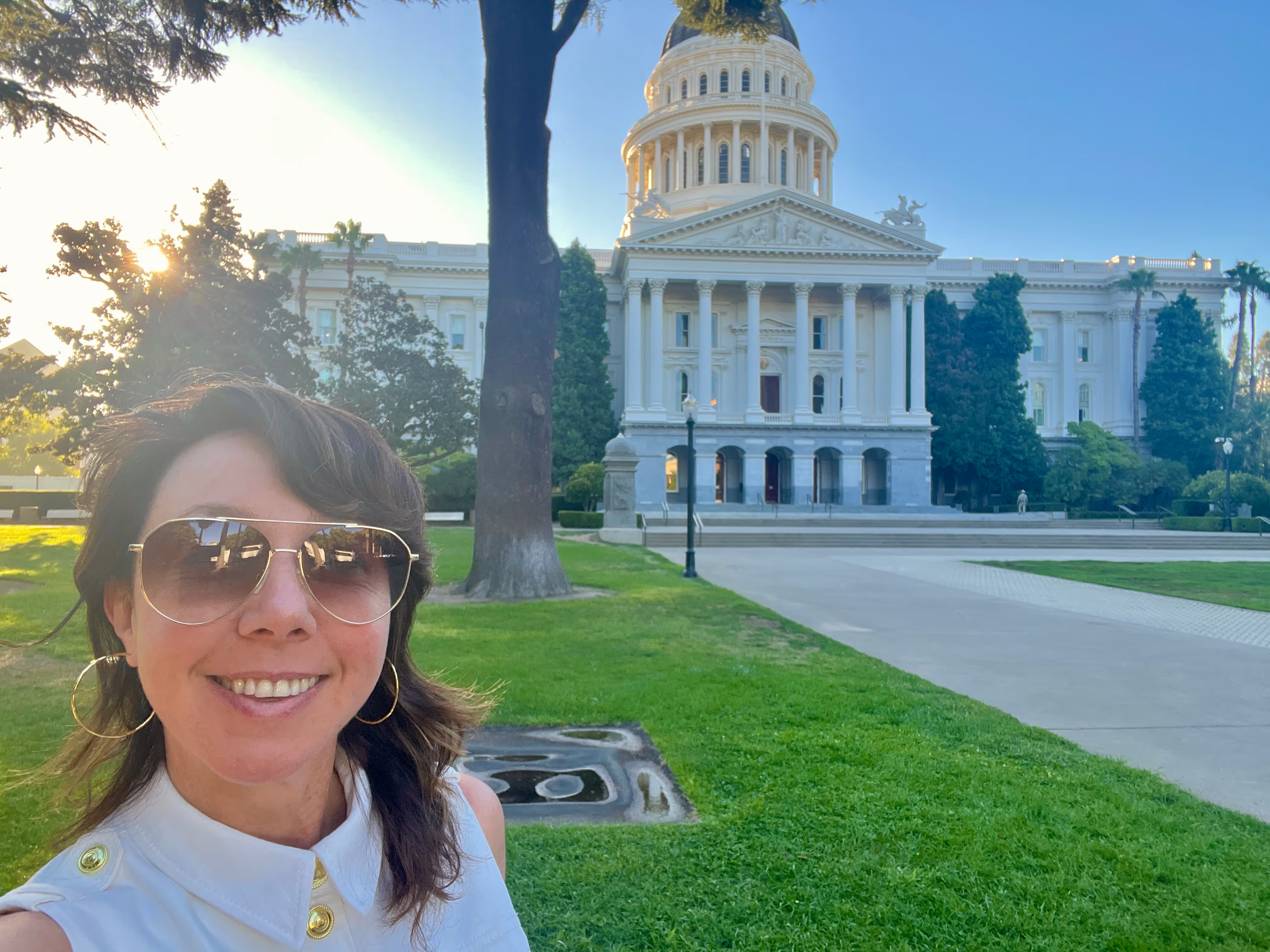
Across every chapter of my career - teaching, consulting, and public service - my purpose has stayed the same: to strengthen the systems that allow people, like the riders on my dad’s bus, to move toward opportunity.